ENTRAIN CPU — interior design

How might we design a shared vehicle that invites active participation and collaboration between passengers?

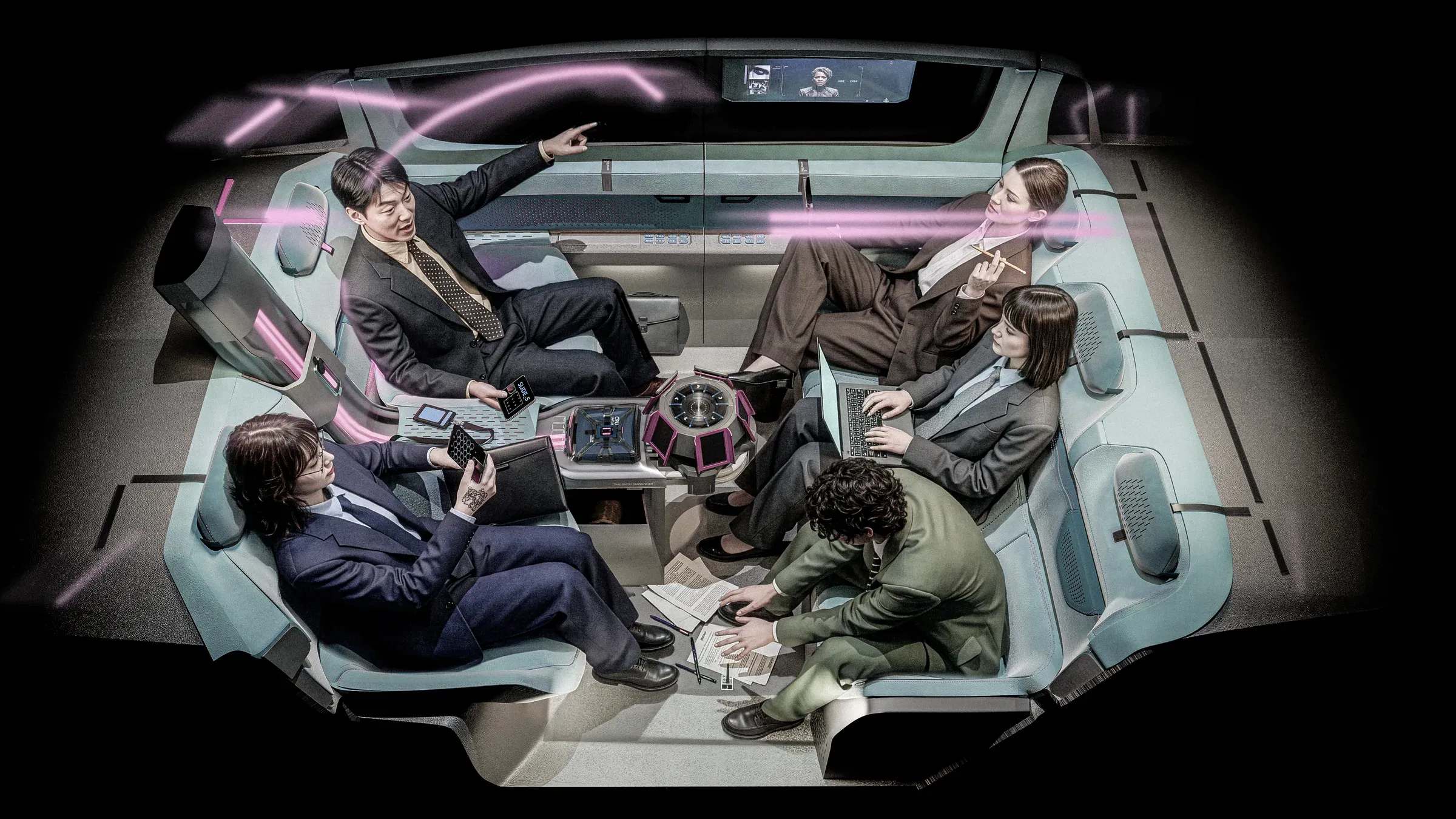
Entrain CPU reimagines the vehicle interior as a shared social space rather than a place for passive transport. Through a central docking station and playful, physical interaction, passengers are invited to contribute, connect, and shape the journey together.

Contribution = Connection
Digitally connected, rarely present

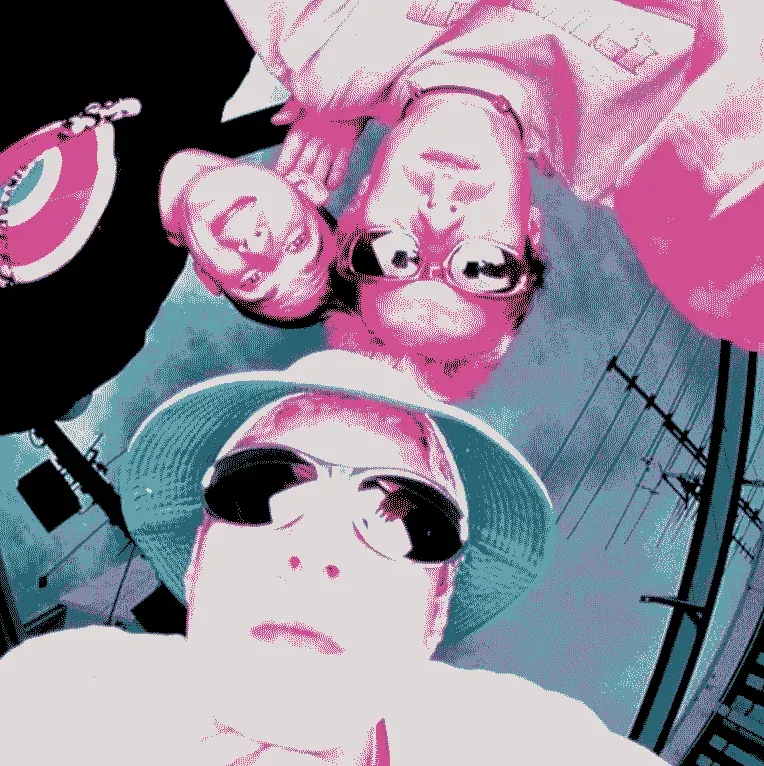
Increased social media use has coincided with rising loneliness. Even as we stay digitally connected, many of us spend less time truly present with others. Studies suggest that actively contributing, rather than passively consuming, is a key factor in building real connection, making shared, participatory moments more important than ever.

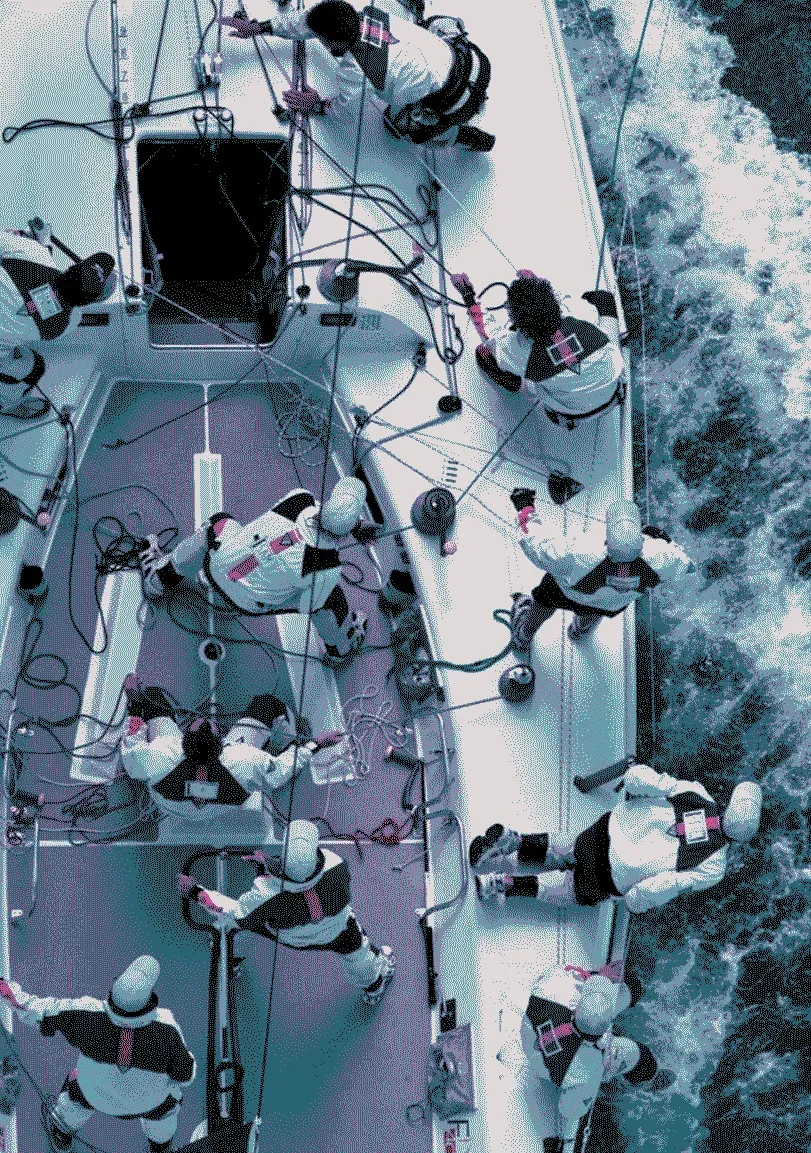
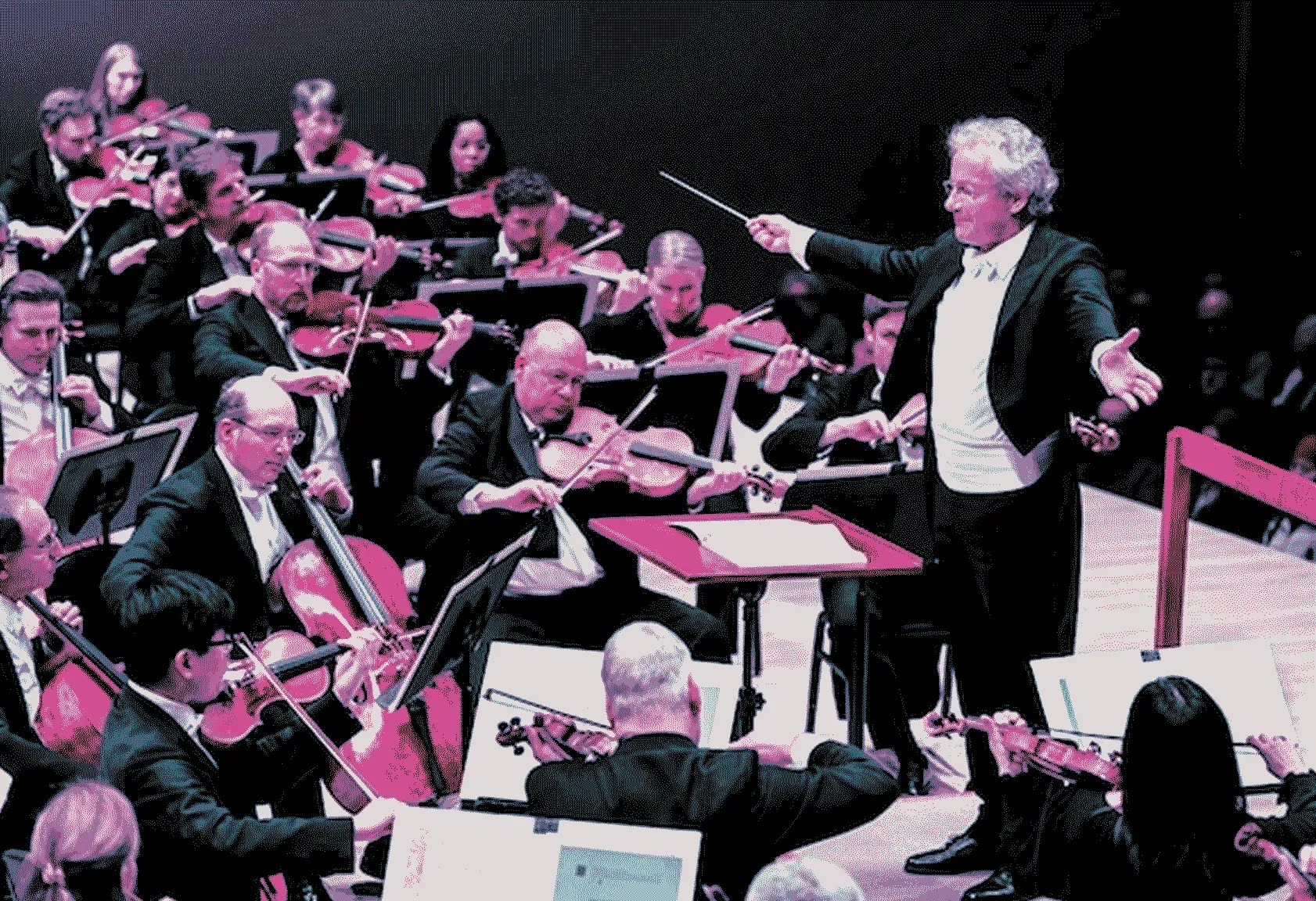
What if we could take part in the vehicle like the
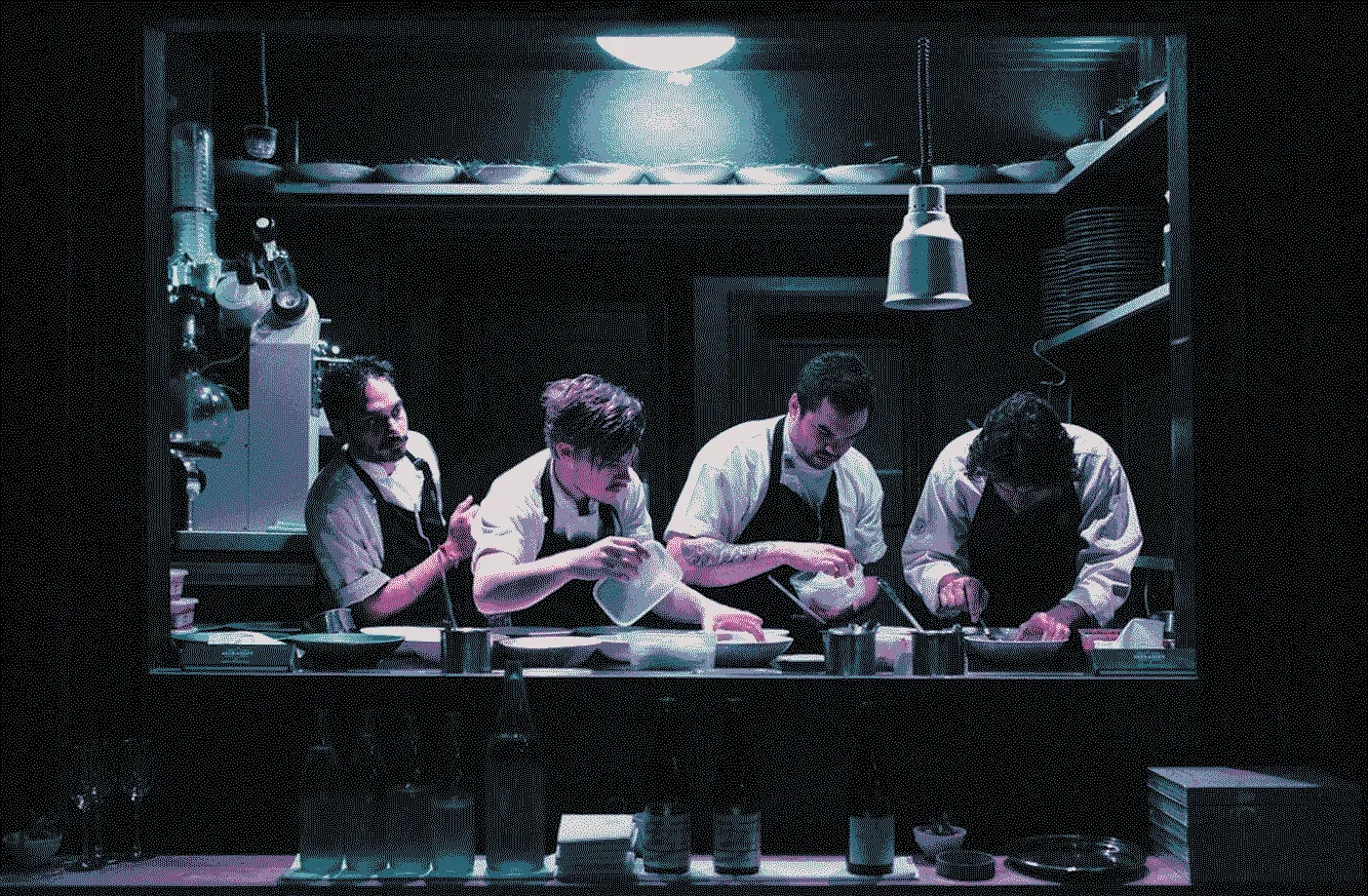
CHEFSSAILORSMUSICIANS
ChefsSailorsMusicians

Smart systems often hide how they work, becoming black boxes that are hard to trust or understand. But what if that process was visible instead, something passengers could see and read, not just experience? Making technology understandable is what makes it approachable.
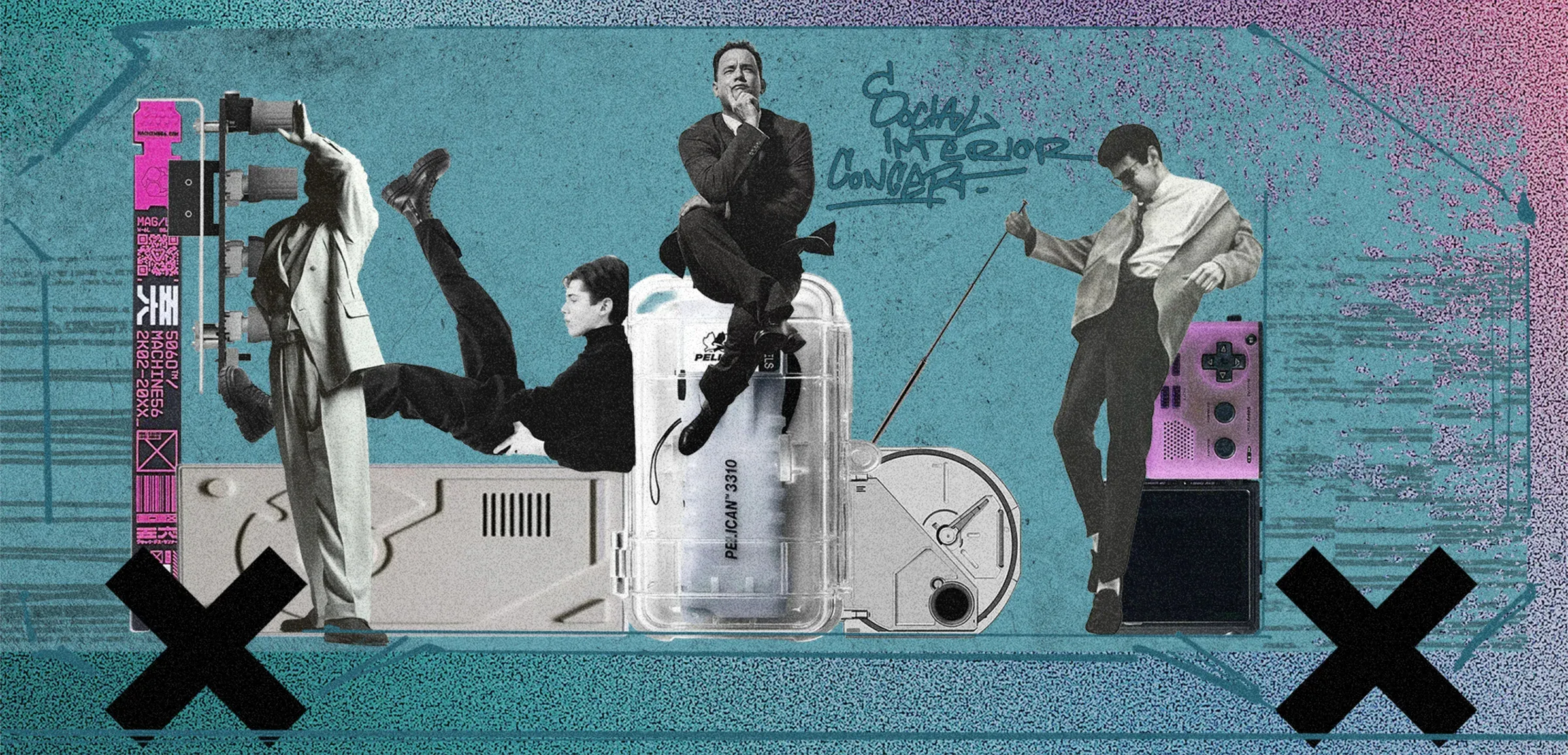
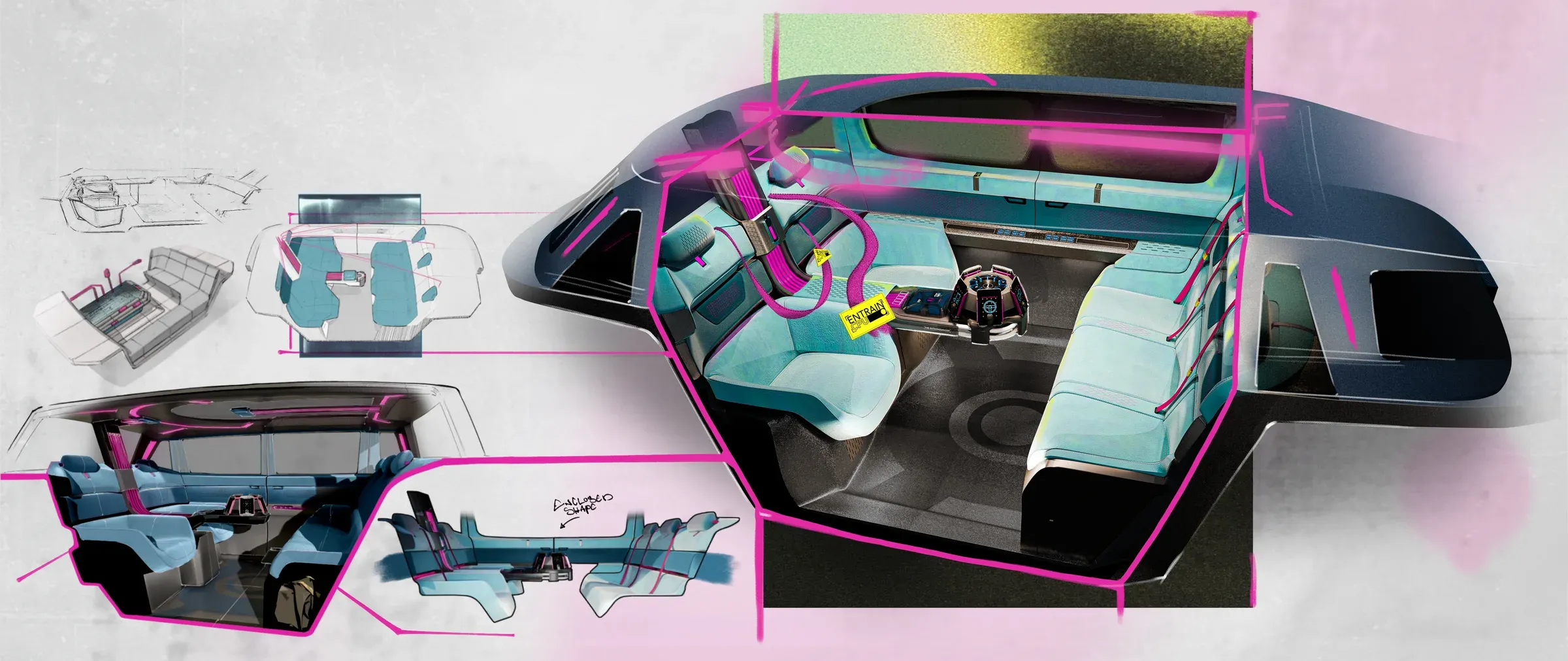
THE RESULT

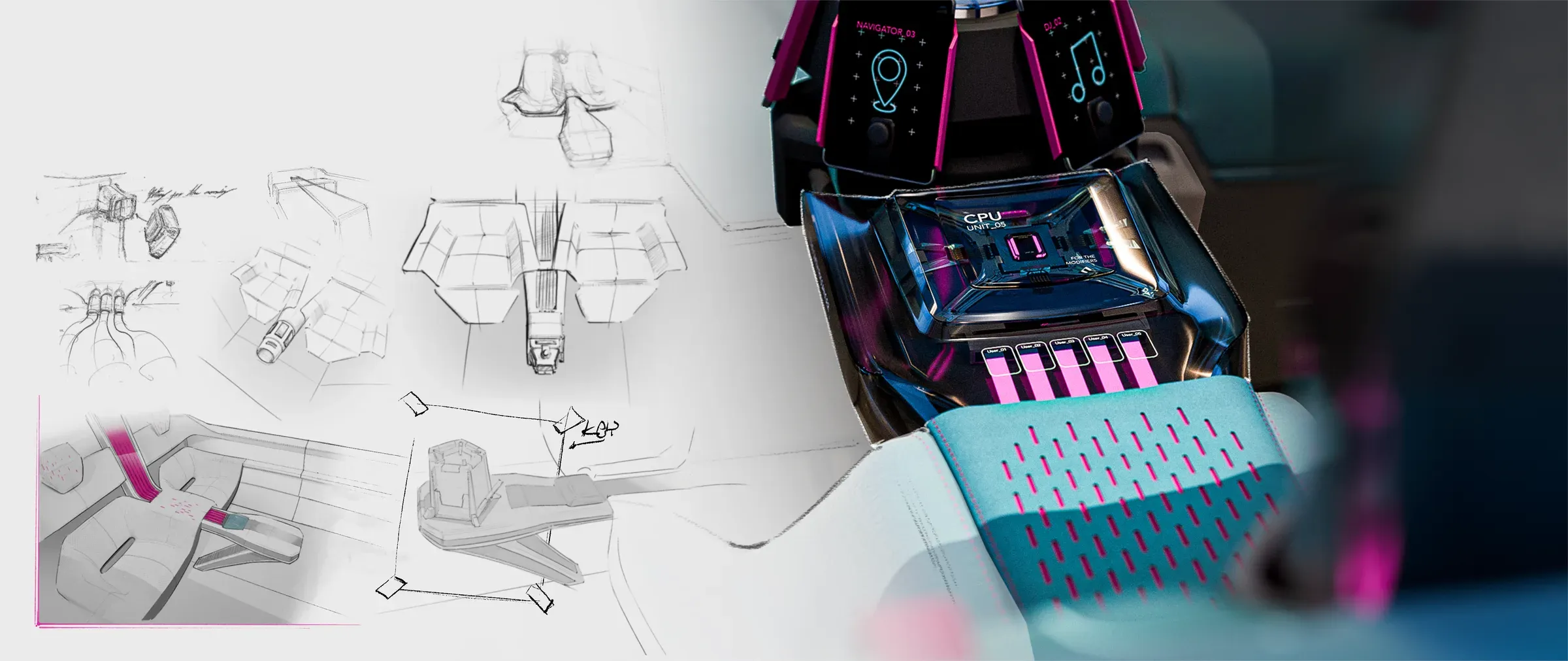
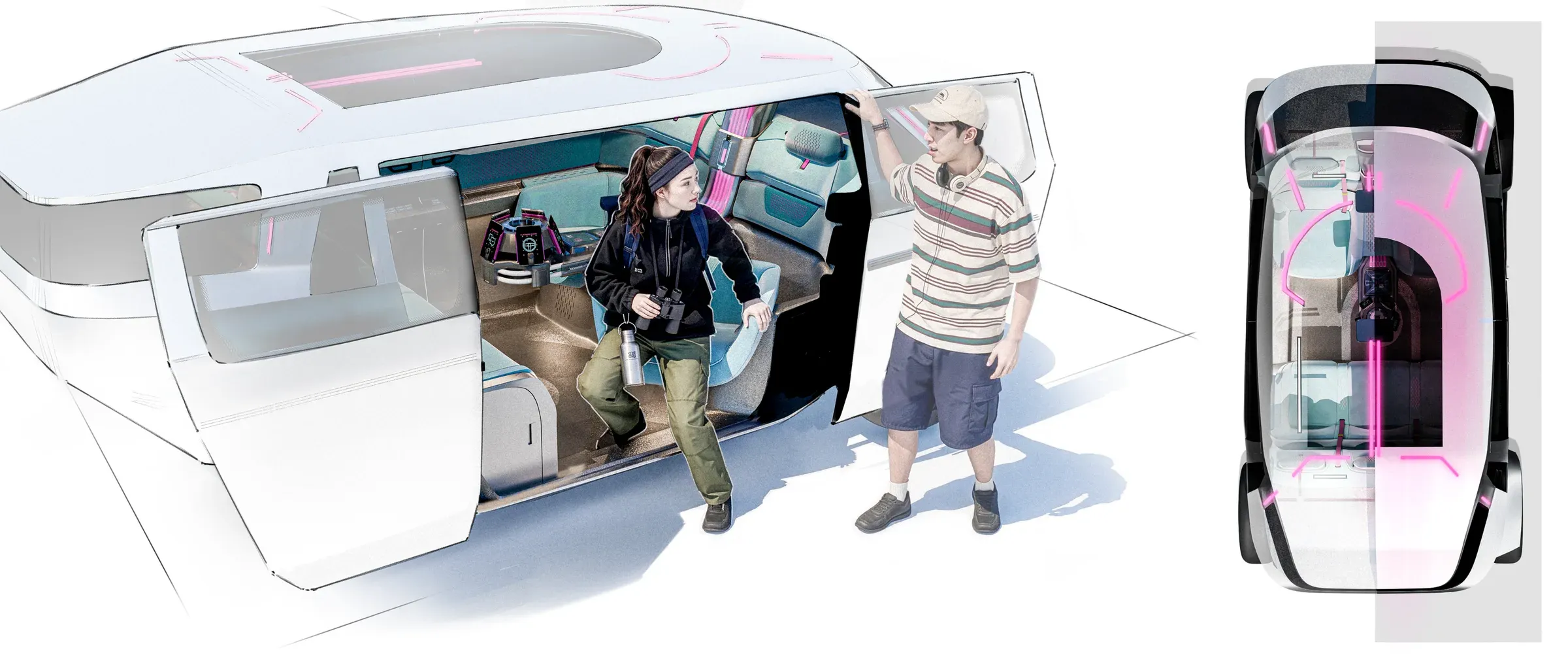
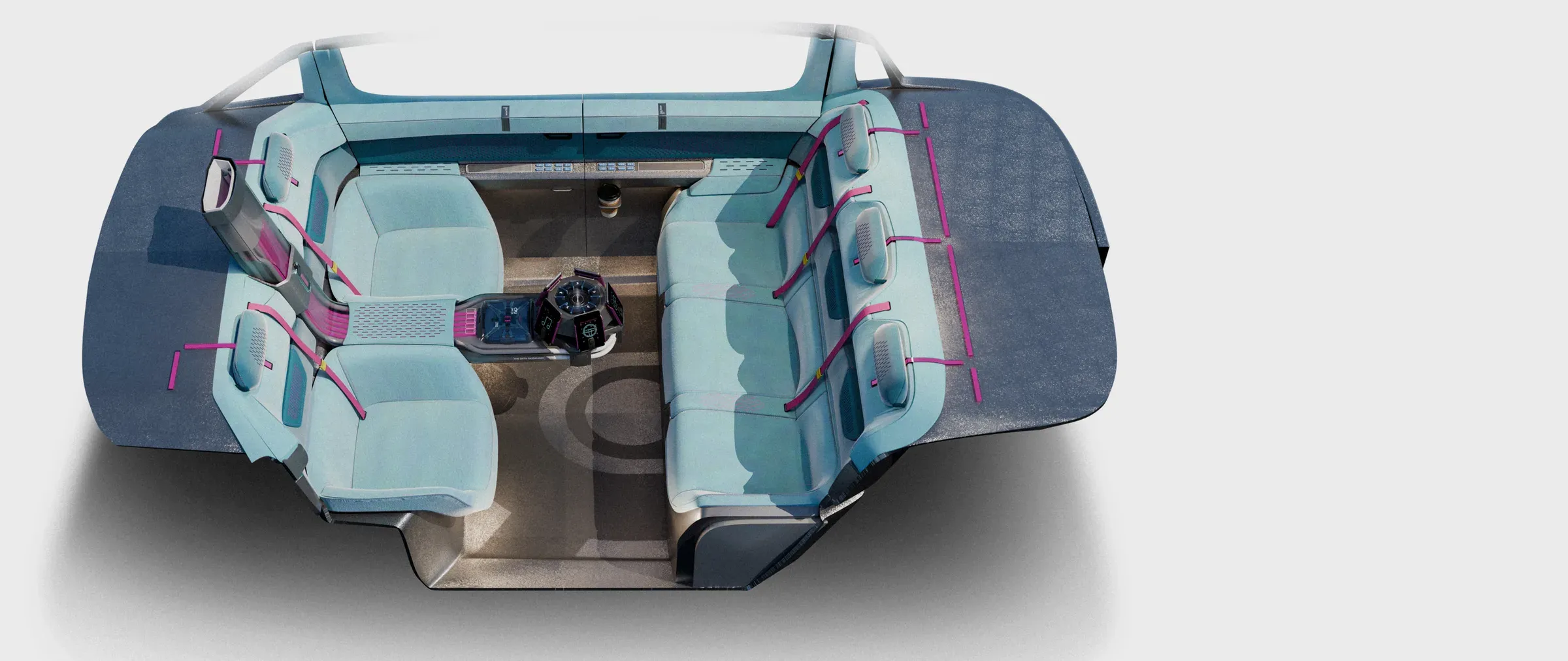
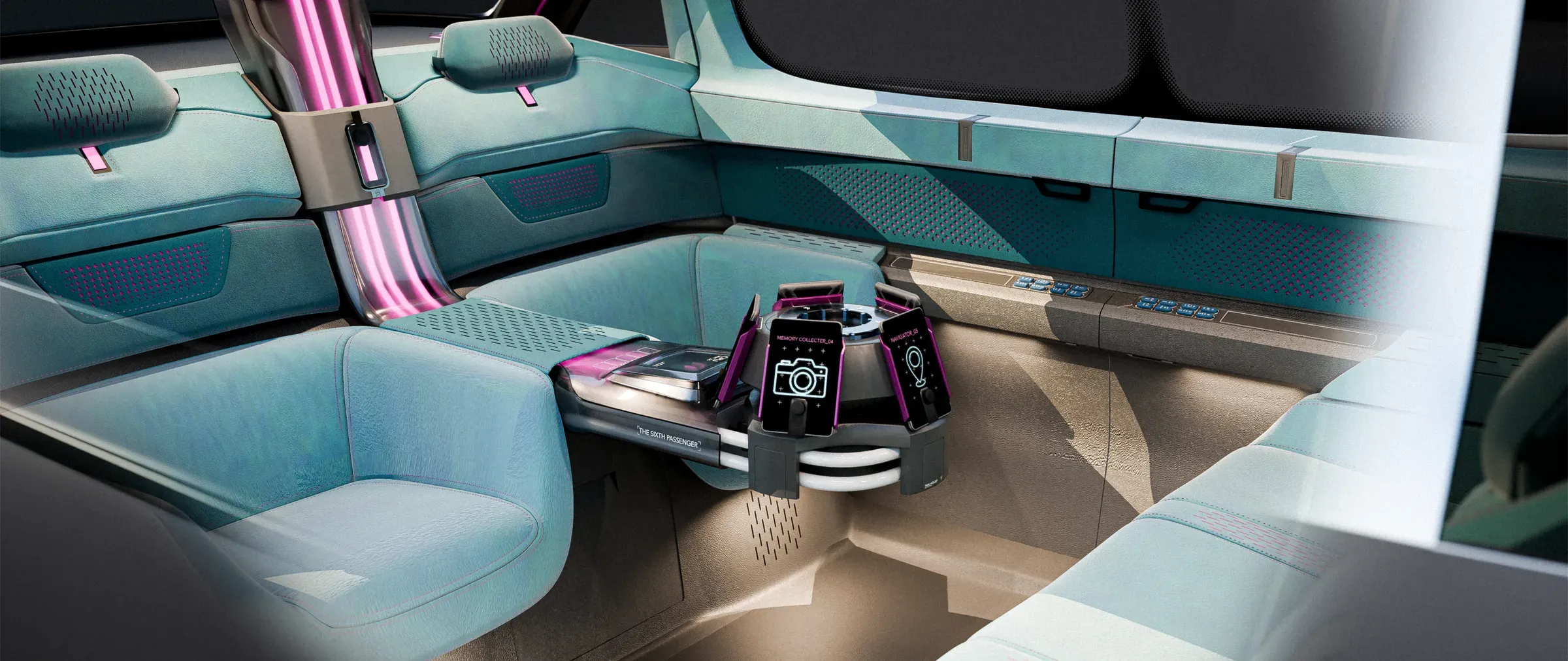
Lands in a central, rotating hub that makes the vehicle’s system visible and shared. Warm, tactile surfaces meet exposed technical structure, while seating and light flow around it, resolving into one open, social space.

THE SIXTH PASSENGER

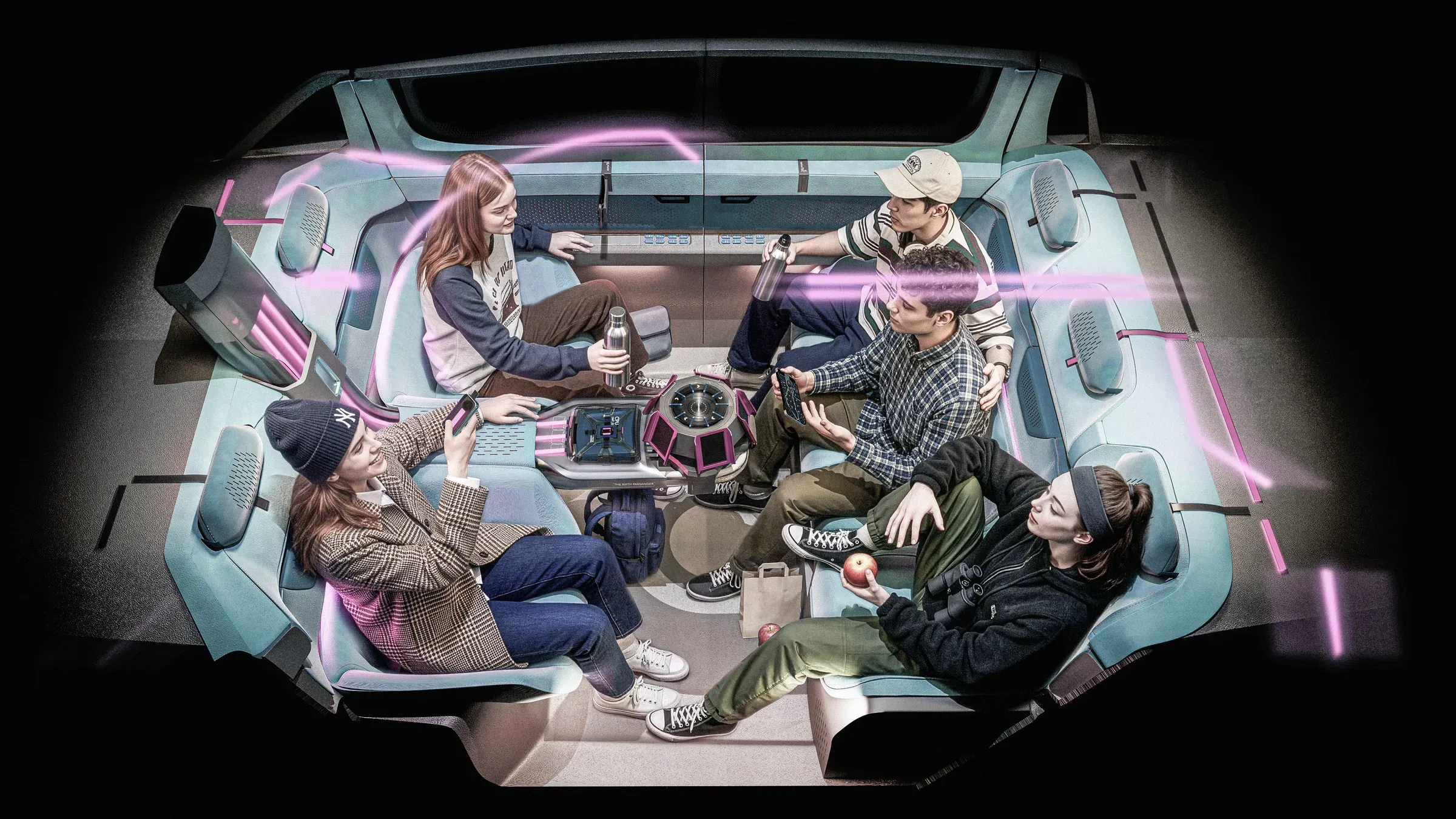
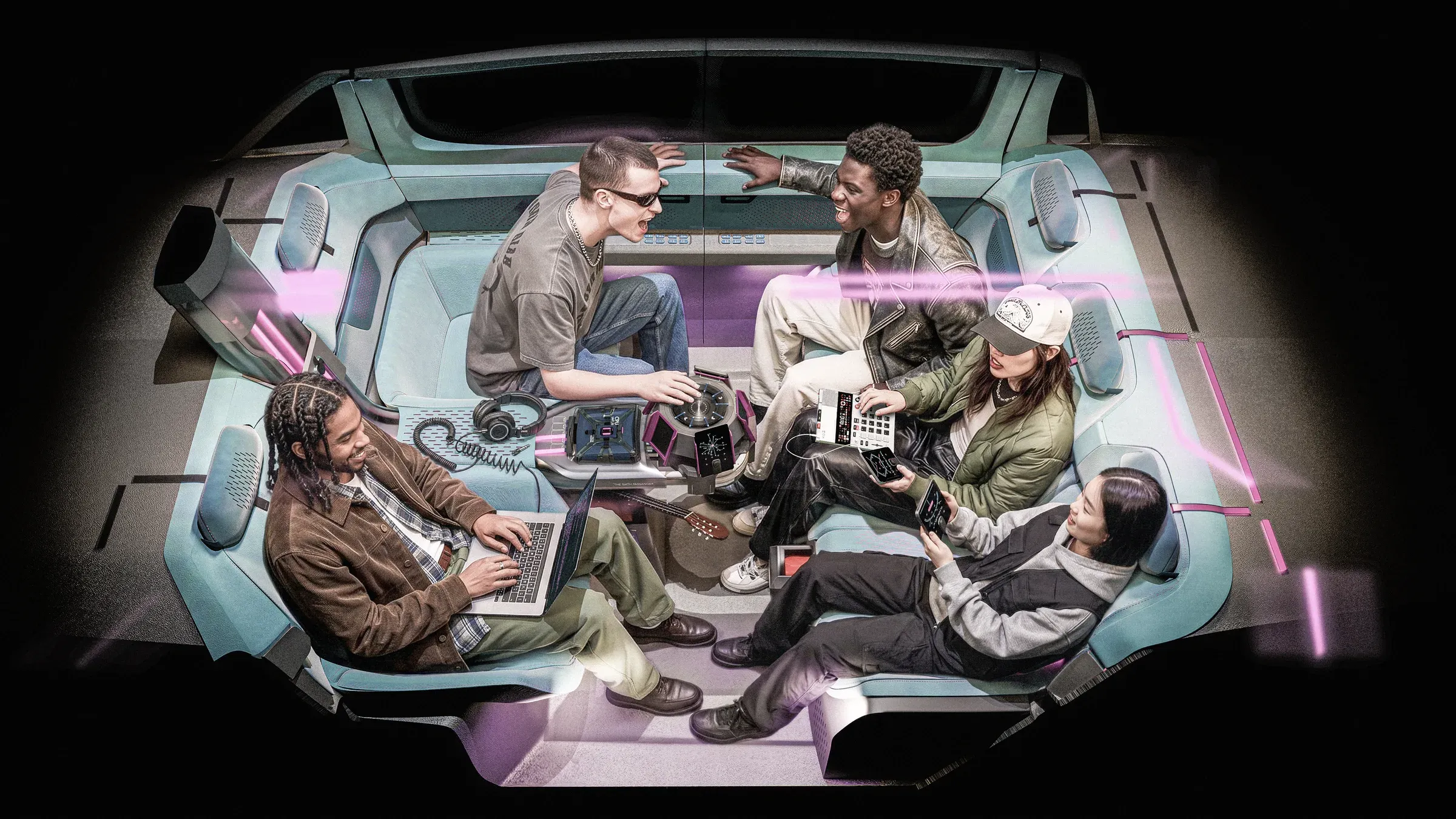
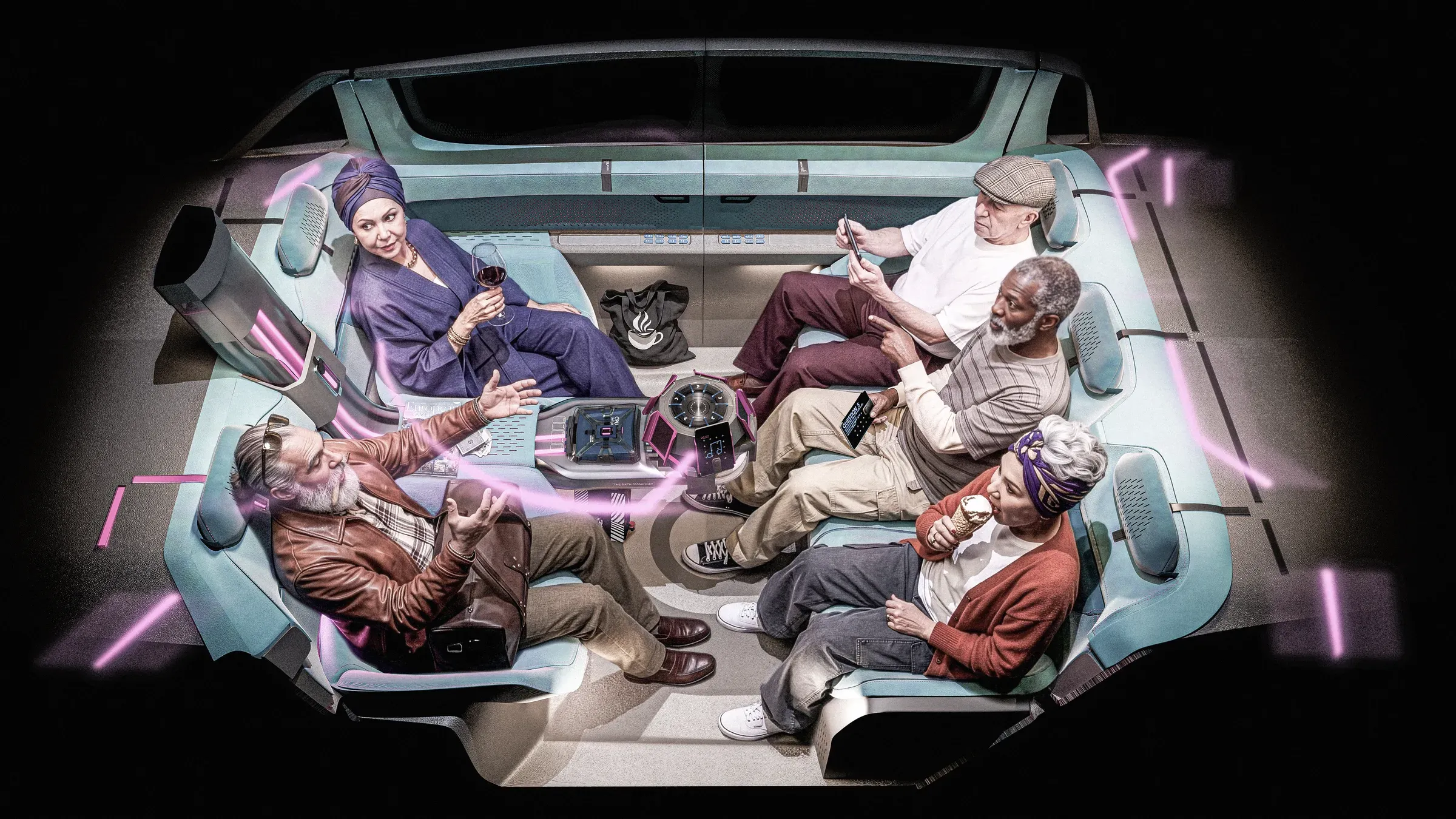
At the center sits the sixth passenger — a social mediator between people and system. It distributes tasks, holds the group’s attention, and gives the vehicle’s technology a visible, physical presence passengers can engage with.

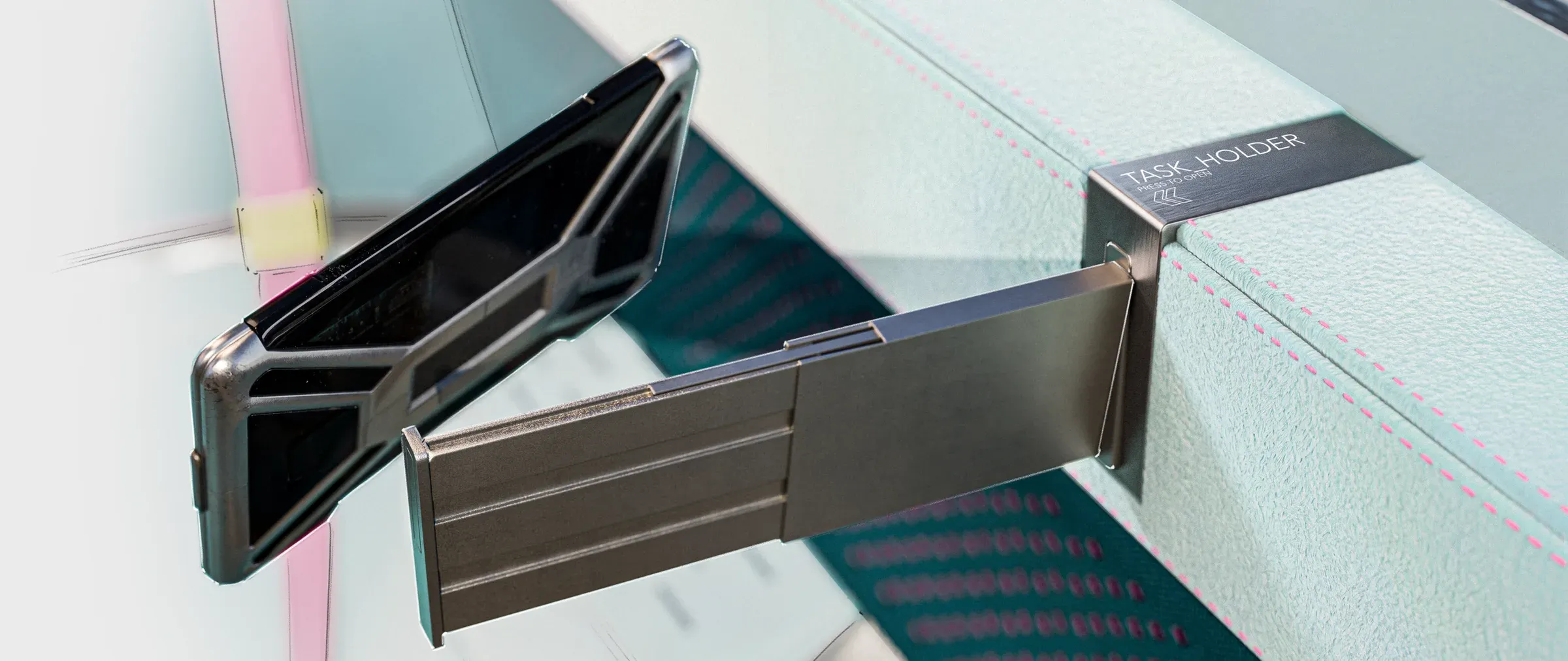
Each passenger has their own task, distributed by spinning the central hub, turning task-sharing into a simple, yet playful physical gesture.
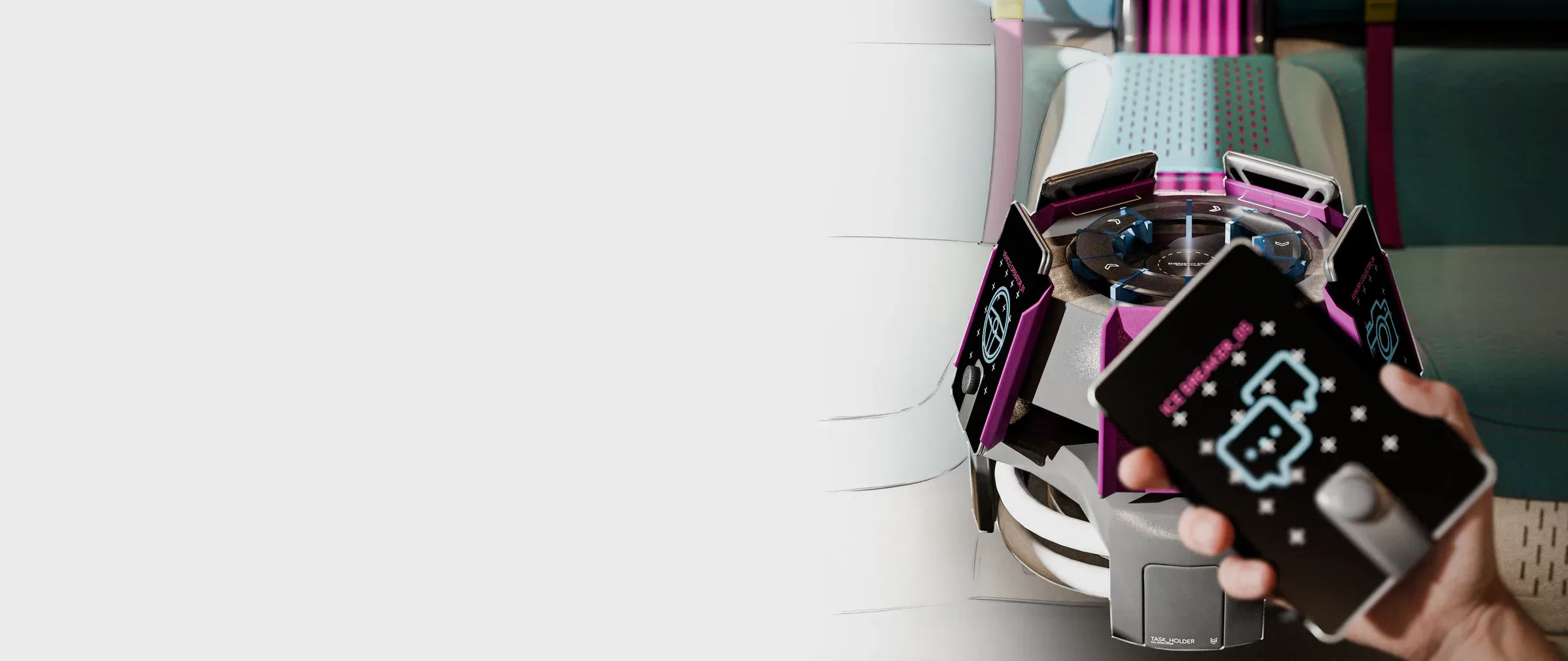
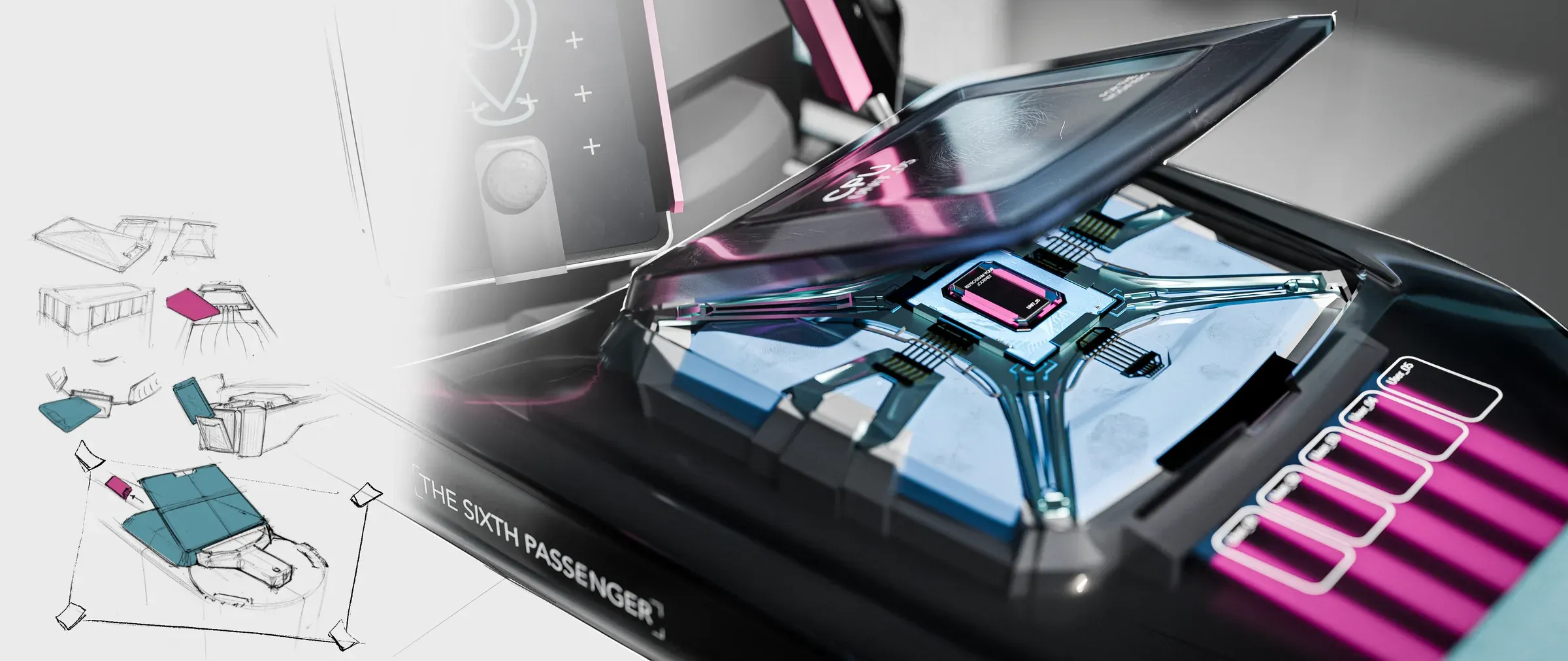
Each passenger has their own task, distributed by spinning the central hub, turning task-sharing into a simple, yet playful physical gesture.
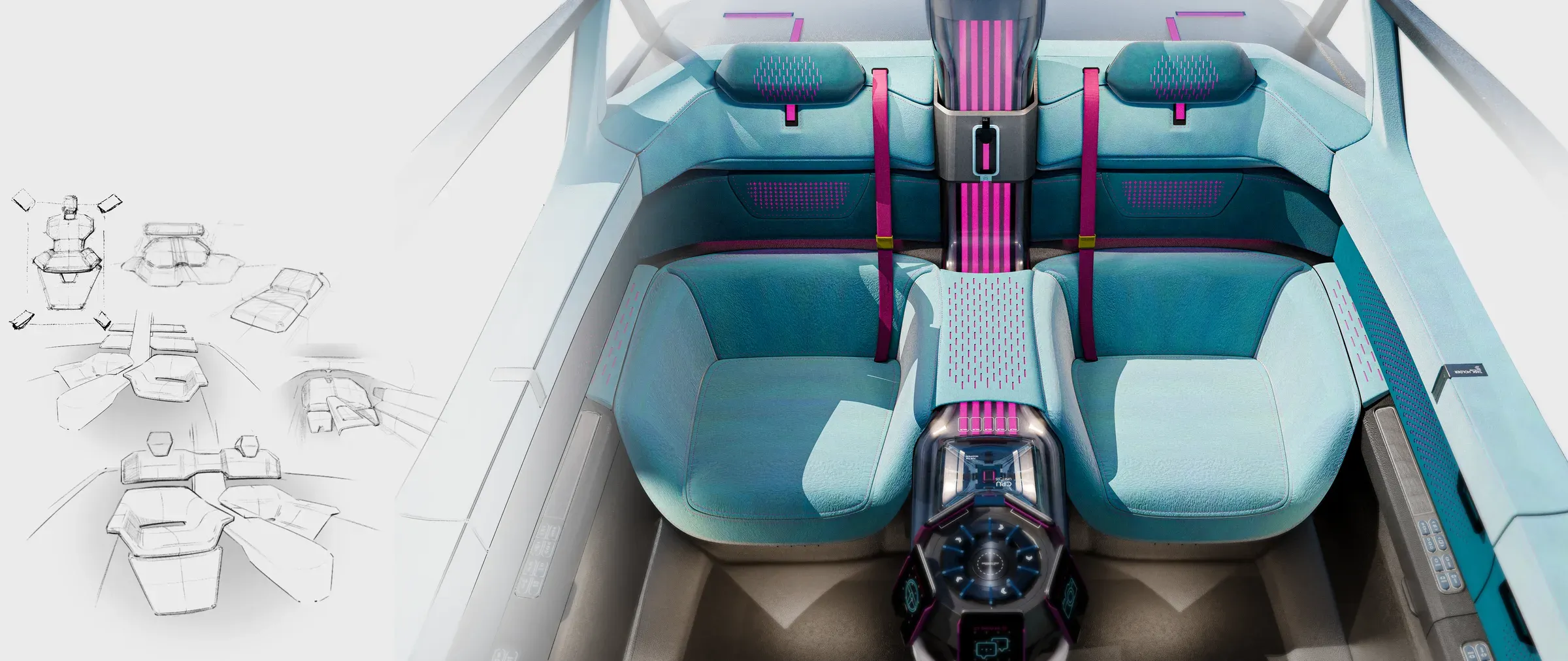
OPEN SOURCE

The vehicle comes with a set of core tasks, but its chip can be modified to add new ones. This allows the vehicle to evolve and adapt to different needs over time, rather than staying fixed to one function.

SEATS

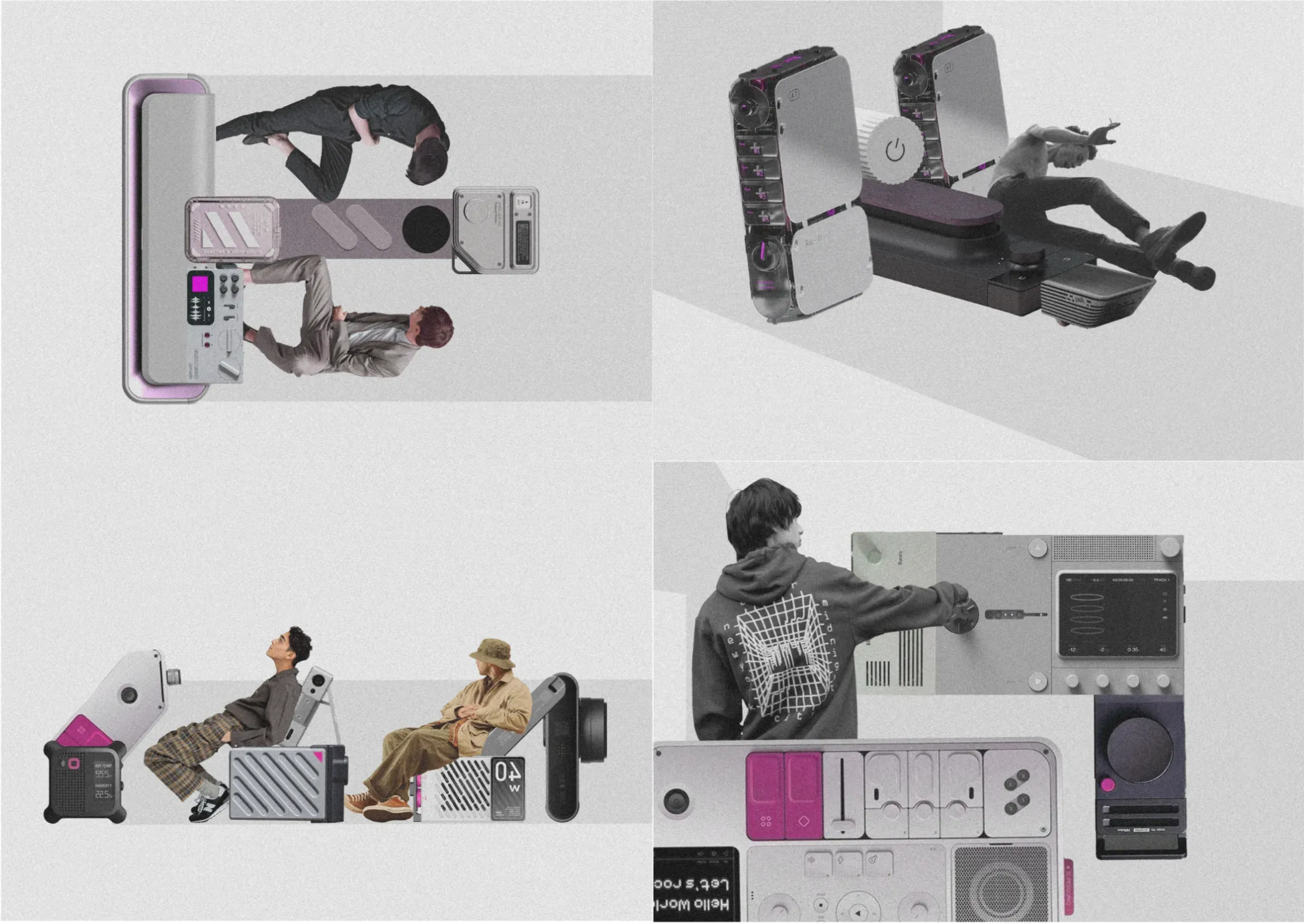
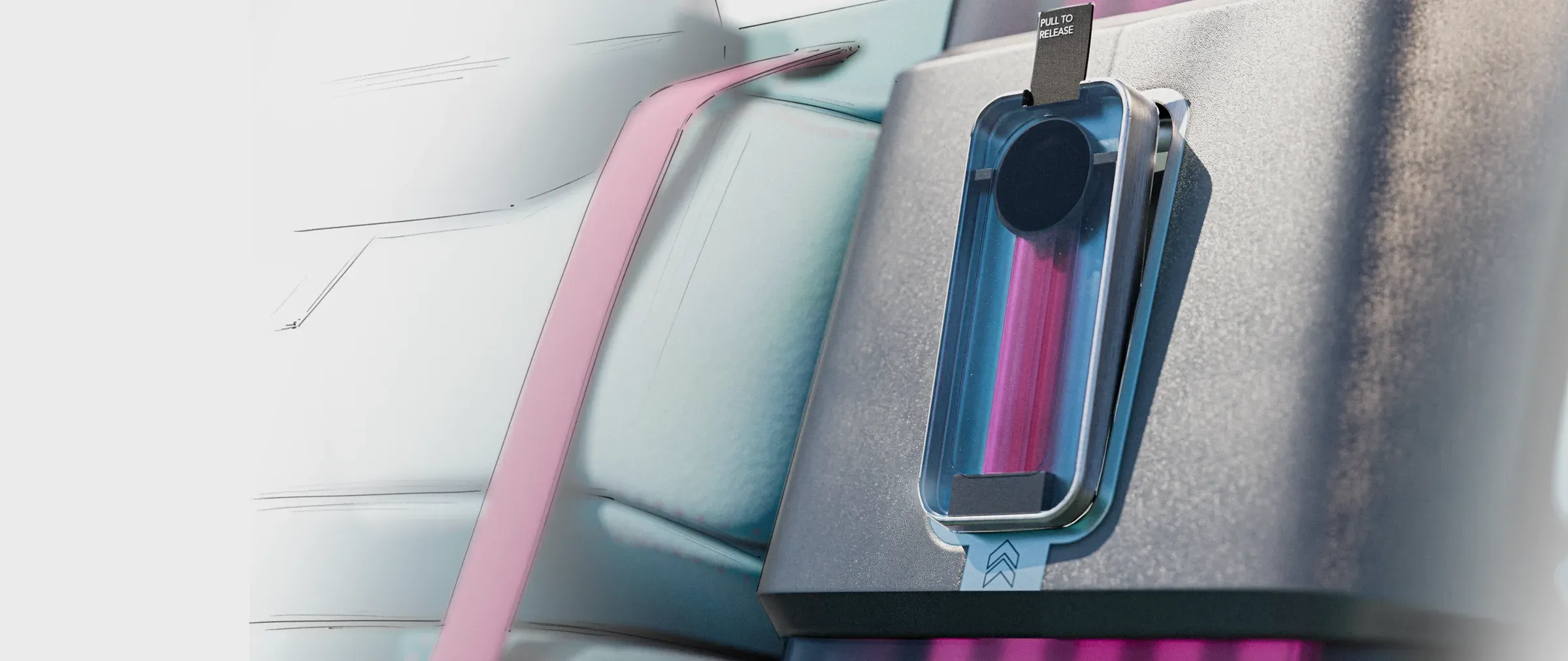
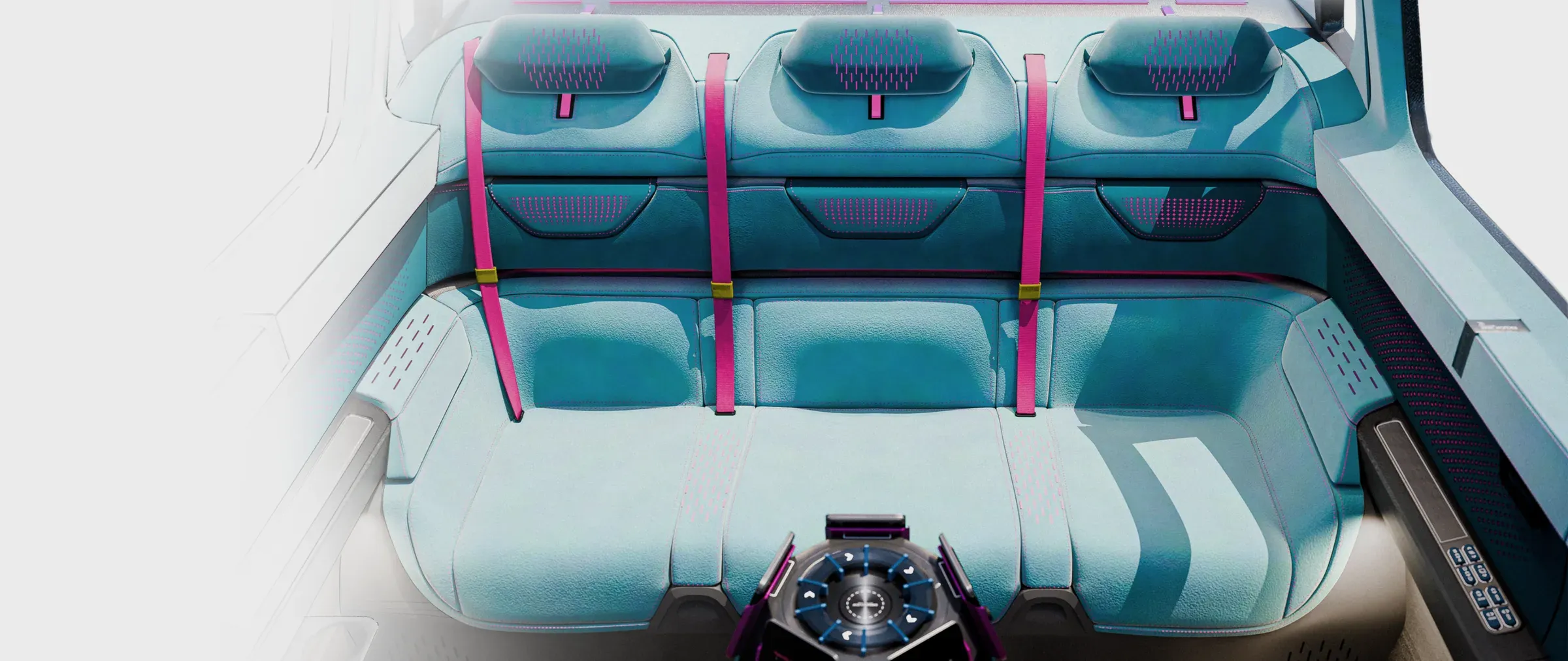
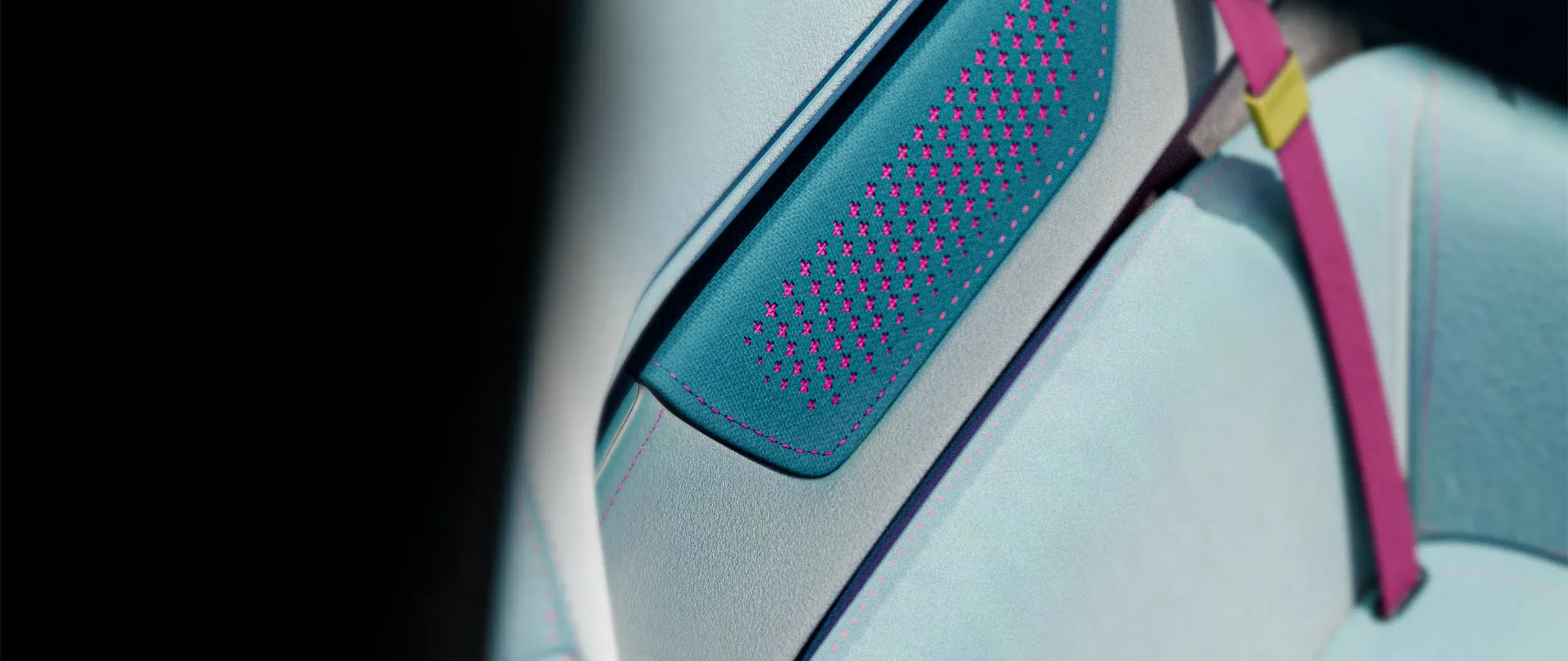
The seats take on an enclosed, lounge-like form that flows through the interior, visually connecting passengers into one shared space. Rather than isolating each seat individually, the design invites movement and repositioning, creating comfort without separation.


SCENARIOS


SOME EXTRA